Against Cleisthenes: Solon and Plato’s Shared Vision of Governance in Athens

Proving that Solon was the progenitor of the aristocratic beliefs of Plato.… Read More Against Cleisthenes: Solon and Plato’s Shared Vision of Governance in Athens
Proving that Solon was the progenitor of the aristocratic beliefs of Plato.… Read More Against Cleisthenes: Solon and Plato’s Shared Vision of Governance in Athens
A fragment of the Neoplatonist Proclus’ lost work refuting Christianity.… Read More Why Three Cannot Truly be One

An in depth study of early Shi’ite history reveals a calamity for Shia polemicists, it reveals that the doctrine of imamate is far from straightforward, we learn that the Shi’ite community was deeply divided on who was next in line. … Read More The Imamate Confusion: A Catalogue of Early Shi’ite Sects
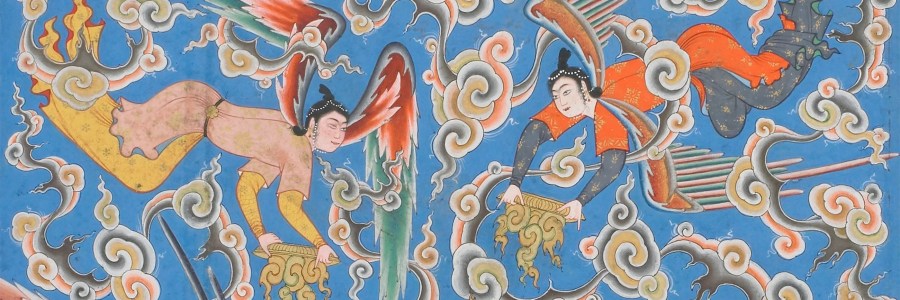
Shaykh al-Islām Fakhr al-Dīn al-Rāzī addresses the misinterpretations of some people concerning this verse that could lead to anthropomorphism. He draws the attention to the fact that such descriptions must be understood in a manner so as not to infringe upon the transcendence of Allāh Subḥānahu wa Taʻāla. Where literal interpretation may contradict the majesty of the divine nature, Imām al-Rāzī insists upon Ta’wīl (interpretative theology).… Read More “Eight will uphold the Throne of thy Lord that day, above them” Q|69:17 – Sūrat al-Hāqqah
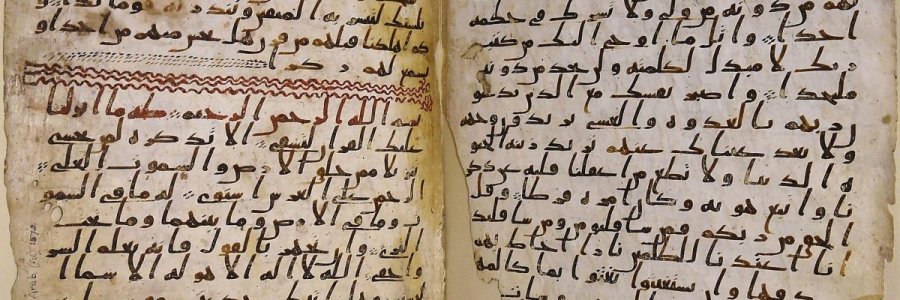
Shaykh al-Islām Fakhr al-Dīn al-Rāzī in his great exegesis of the Qur’ān Mafāṭīḥ al-Ghayb refutes the anthropomorphists in their use of this verse (Q|38:75) to wrongly insist that Allāh (Exalted be He) has hands, which he used as tools to create Adam. Here the Imām advocates for the use of Ta’wīl (allegorical interpretation) in cases where there is compelling evidence to justify doing so. I will translate his exegesis for this verse below.… Read More “That which I have created with both My hands” Q|38:75 – Sūrah Ṣād
Even if we were to concede that the Quran lacks undeniable evidence of its divinity, it remains clear that there is no doubt about its excellence. This argument is explored using modus tollens.
… Read More Does the “Lack of Evidence” in the Qur’an leave room for doubt?

The so-called “Salafīyah”, following the doctrine of Muḥammad ibn ʿAbd al-Wahhāb al-Najdī, have actively engaged in the desecration of the houses and graves of the Awliyā’ (saints) and Ṣaḥābah claiming to combat idolatry in doing so. This verse of the Qur’ān counters this erroneous conviction. Shaykh al-Islām Fakhr al-Dīn al-Rāzī, in the second part of his exegesis on this verse, elaborates on the intended meaning, and identifies those responsible for erecting a mosque over the graves of the Aṣḥāb al-Kahf (the people of the cave) as Muslims (or the believers during that era). I will translate the second part of his tafsīr below.… Read More “…We verily shall build a place of worship over them.” Q|18:21 – Sūrat al-Kahf

It is a common belief to many that Macroevolution and evolutionary biology as a whole undermine God’s role in the creation of mankind and the processes of the universe, the aim of this article is to show that such a stance is untenable.
… Read More Macroevolution and Islam are not in conflict

A refutation of those who adhere to Young Earth Creationism, along with an excerpt from Ibn Hazm’s work about the age of humanity and its significance to Islamic theology.… Read More Ibn Hazm and the Age of Humanity

An in-depth study of the Battle of the Camel and the influence the followers of Abdullah ibn Saba had on the events following the death of Caliph Uthman. … Read More Clarification on the Battle of The Camel
 Mehdi's Library